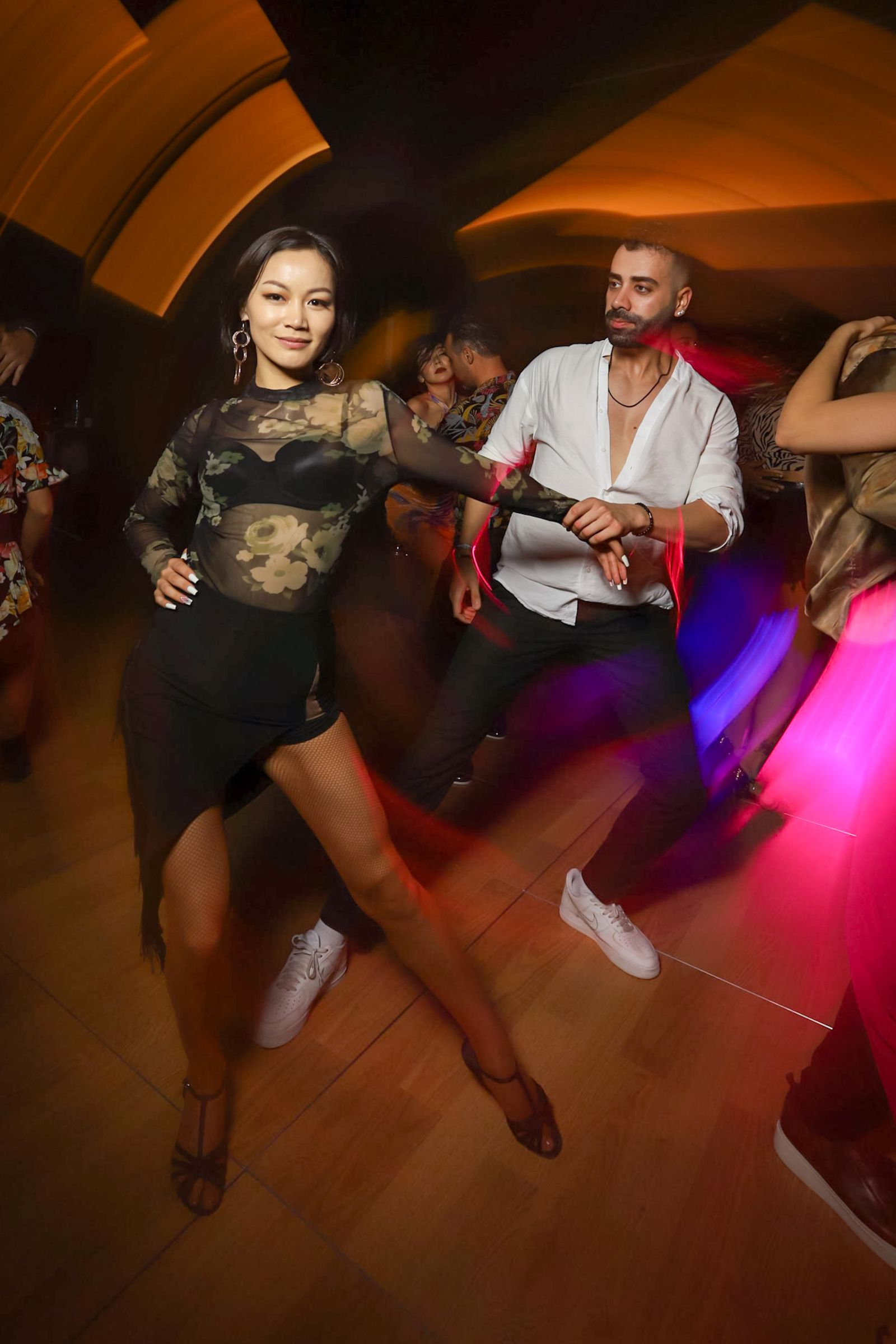
Walking into your first dance class is easier when your body already knows a few moves. These five grooves need no mirror, no partner and no experience — just a playlist you love and ten minutes a day. Practise them for two weeks and you'll arrive at your trial class already moving with the music.
1. The bounce: your engine room
Every style in our studio starts with the bounce — knees soft, chest relaxed, weight dropping on every beat. Stand with feet shoulder-width apart and pulse down on counts 1, 2, 3, 4. Once it feels automatic, try doubling the tempo. This single skill makes hip-hop, Bollywood and Zumba instantly more fun.
2. Step-touch and grapevine legs
Step right, bring the left foot to meet it, and clap. That's the step-touch behind half the warm-ups you'll ever do. When it feels easy, cross behind into a grapevine: side, behind, side, together. Practice both directions — your showcase choreography will thank you.
3. Isolations: head, shoulders, ribs, hips
Move one body part while everything else stays still. Start with slow head slides side to side, then shoulder rolls, rib shifts and hip circles. Isolations look impressive on stage, but their real job is teaching your brain to control your body in pieces.
4. The body roll and the box step
The body roll is a wave travelling chest-to-hips; practise it against a wall to keep it smooth. The box step — forward, side, back, side — is the skeleton of waltz, salsa basics and countless Bollywood transitions. Together they give you flow plus footwork.
Bring them to your trial class
Film yourself on day one and day fourteen — the difference will surprise you. Then bring that confidence to a free trial at the studio, where our faculty will layer these exact grooves into your first real routine.